Labor Protection Garment Industry Phases Out Low-End Capacity, Multi-Functional Composite Workwear Becomes a Mandatory Demand
On July 1, 2026, a series of mandatory national standards under GB 39800 Specifications for the Provision of Personal Protective Equipment officially took effect. The standards cover four high-risk sectors including construction, machinery, chemical engineering and electric power, substantially raising the access thresholds for the production, testing and procurement of labor protection garments. China’s labor protection apparel industry has entered a new round of standardized reshuffling. The Ministry of Emergency Management, together with the State Administration for Market Regulation, has launched a nationwide special rectification campaign for PPE products. The crackdown targets unqualified workwear without LA safety certification and substandard apparel with underperforming fabrics. A large number of small workshops that only produce ordinary cotton work clothes have suspended production for rectification, pushing the industry to concentrate market share on leading enterprises with independent fabric R&D capabilities and intelligent production lines.
The biggest adjustment brought by the new standards is the mandatory requirement for composite protective workwear for posts exposed to multiple hazards, while single-function labor protection garments are gradually eliminated from procurement lists for high-risk working scenarios. Photovoltaic and semiconductor factories are rolling out large-scale replacements of ESD cleanroom work uniform, whose fabric surface resistance must stably stay within 10⁶ to 10⁹ ohms to avoid static electricity damaging precision chips. Power grid and metallurgical enterprises are phasing out outdated uniforms and uniformly purchasing arc flash & flame resistant coverall. Its fabric must pass dual flame retardant tests complying with NFPA 2112 and GB 8965, with zero molten dripping and carbonization under high-temperature arc exposure. Chemical resistant composite protective suit has become a necessity for chemical and electroplating workshops, featuring a multi-layer barrier membrane structure to block penetration of strong corrosive liquids.
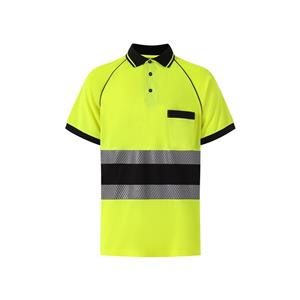
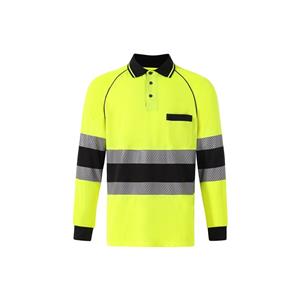
High-temperature working conditions in summer have driven soaring demand for phase-change thermostatic high-vis safety jacket. Leveraging industrialized phase-change fiber technology developed by Peking University research teams, the fabric autonomously absorbs and dissipates heat, paired with high-visibility reflective strips to deliver heat relief and hazard warning for road construction. Procurement volume from construction, sanitation and logistics enterprises surged by 47% year-on-year. At the upstream material end, domestic substitution of high-performance protective fabrics accelerates. Mass production of basalt fiber protective fabric has been realized, cutting costs by 32% compared with imported aramid fiber. With superior heat resistance and tear strength, it fits extreme working conditions in fire protection and smelting, breaking the long-term reliance on imported high-end protective fabrics.
Industrial survey data shows that China’s overall labor protection garment market size will exceed RMB 120 billion in 2026, with multi-functional special workwear accounting for over 40% of the total share. Industry experts note that corporate purchasers will no longer focus merely on pricing; fabric test reports, LA certification, washing durability indicators and ergonomic tailoring have become core screening criteria. Labor protection products featuring eco-friendliness, lightweight design and composite protection will continuously capture mainstream market share in the future.